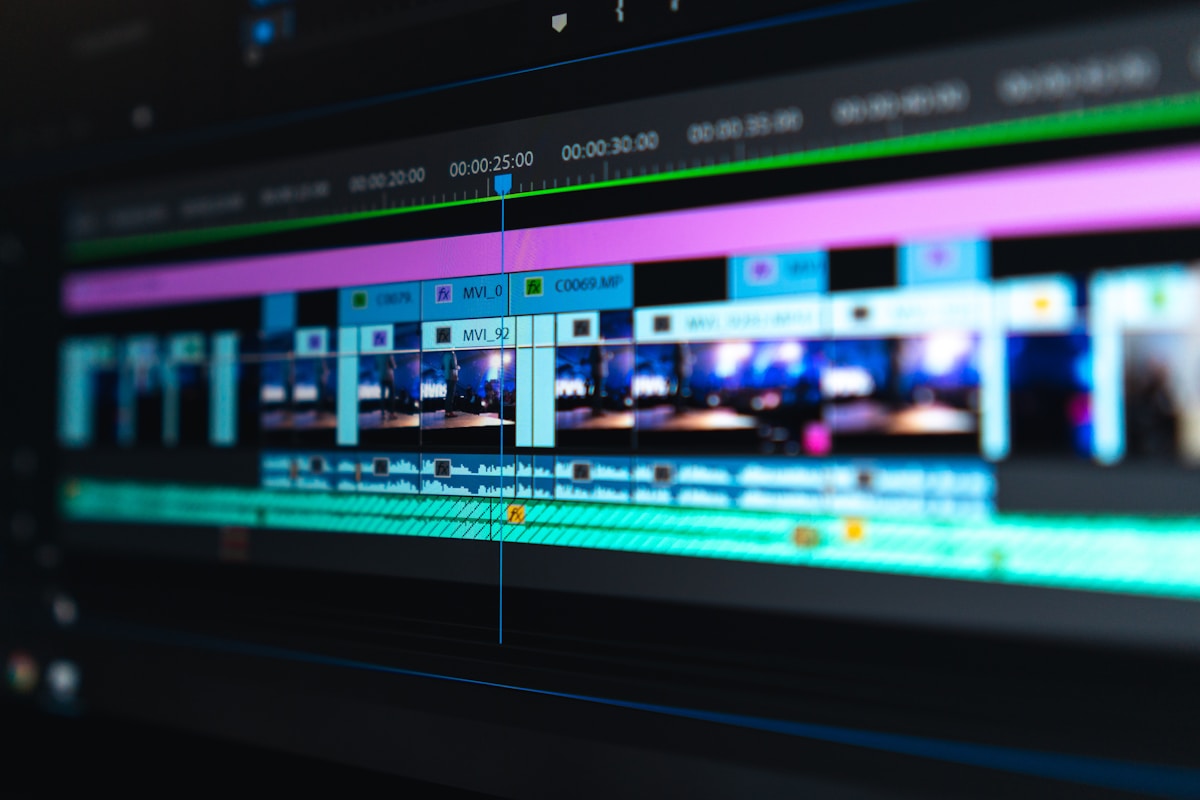
* If you've ever tried to watch old footage on a modern TV, you know the problem. What looked fine on a CRT television in the 1990s looks soft, noisy, and pixelated on a 4K display. The content is priceless — but the quality makes it hard to enjoy.
A professional video upscaling service solves this by using AI to intelligently increase resolution, reduce noise, and sharpen details without introducing the artificial "plastic" look that cheap upscaling tools produce.
How Does AI Video Upscaling Work?
Traditional upscaling simply stretches pixels to fill a larger frame, resulting in a blurry, blocky mess. AI upscaling is fundamentally different. Machine learning models trained on millions of video frames analyze each frame of your footage and reconstruct detail that wasn't visible in the original.
The AI examines edges, textures, faces, and motion patterns to generate new pixel data that's consistent with the original content. The result is video that looks naturally sharp at higher resolutions — not stretched or filtered.
What We Use: Topaz AI Technology
At Pixel 360 Media, we use Topaz Video AI as our primary upscaling engine. After testing every major tool on the market, we've found that Topaz's Proteus model delivers the most natural results, especially for older footage. Unlike some AI models that aggressively "reconstruct" faces and details, Proteus preserves the authentic character of the original while dramatically improving clarity.
We specifically chose Proteus over newer models like Starlight because it preserves authentic faces rather than reconstructing them — a critical distinction when working with family footage and archival content where recognizability matters.
What Types of Video Can Be Upscaled?
Our video upscaling service handles virtually any source format. VHS and VHS-C recordings can be enhanced from their native 240-330 lines of resolution up to 1080p or even 4K. MiniDV and Digital8 footage, already digital at 480p, upscales beautifully to 4K. DVD content at 480p benefits tremendously from AI upscaling. Even 720p and 1080p footage can be enhanced to true 4K with improved detail and reduced compression artifacts.
The key factor is the quality of the source material. A well-preserved VHS tape will upscale far better than a damaged one. That's why every job starts with a free 30-second preview on your own footage, so you see the result before you pay.
Our Three-Tier Enhancement Service
We offer video upscaling at three service levels to match different needs and budgets.
Essential Enhance is our entry-level option, providing AI upscaling to 1080p with basic noise reduction. It is ideal for home videos you want to watch comfortably on modern screens.
HD Remaster adds advanced color correction, stabilization, and frame rate enhancement alongside the resolution boost. This is our most popular tier for family archives and professional content.
4K Restoration is the full treatment — maximum resolution upscaling, frame-by-frame noise reduction, color grading, and audio cleanup. This is for content that needs to look broadcast-ready.
Real Results, Not Gimmicks
We show every client before-and-after comparisons so you can see exactly what to expect. We never oversell what AI can do — some footage has limitations based on the original recording quality. But in most cases, the improvement is dramatic.
Ready to see what AI upscaling can do for your footage? Check out our video enhancement services page for samples, or contact us for a free assessment. Send us a short clip and we'll show you a sample upscale before you commit.
Stay Updated
Get the latest tips on video enhancement, photo restoration, and audio cleanup delivered to your inbox.
No spam. Unsubscribe anytime.