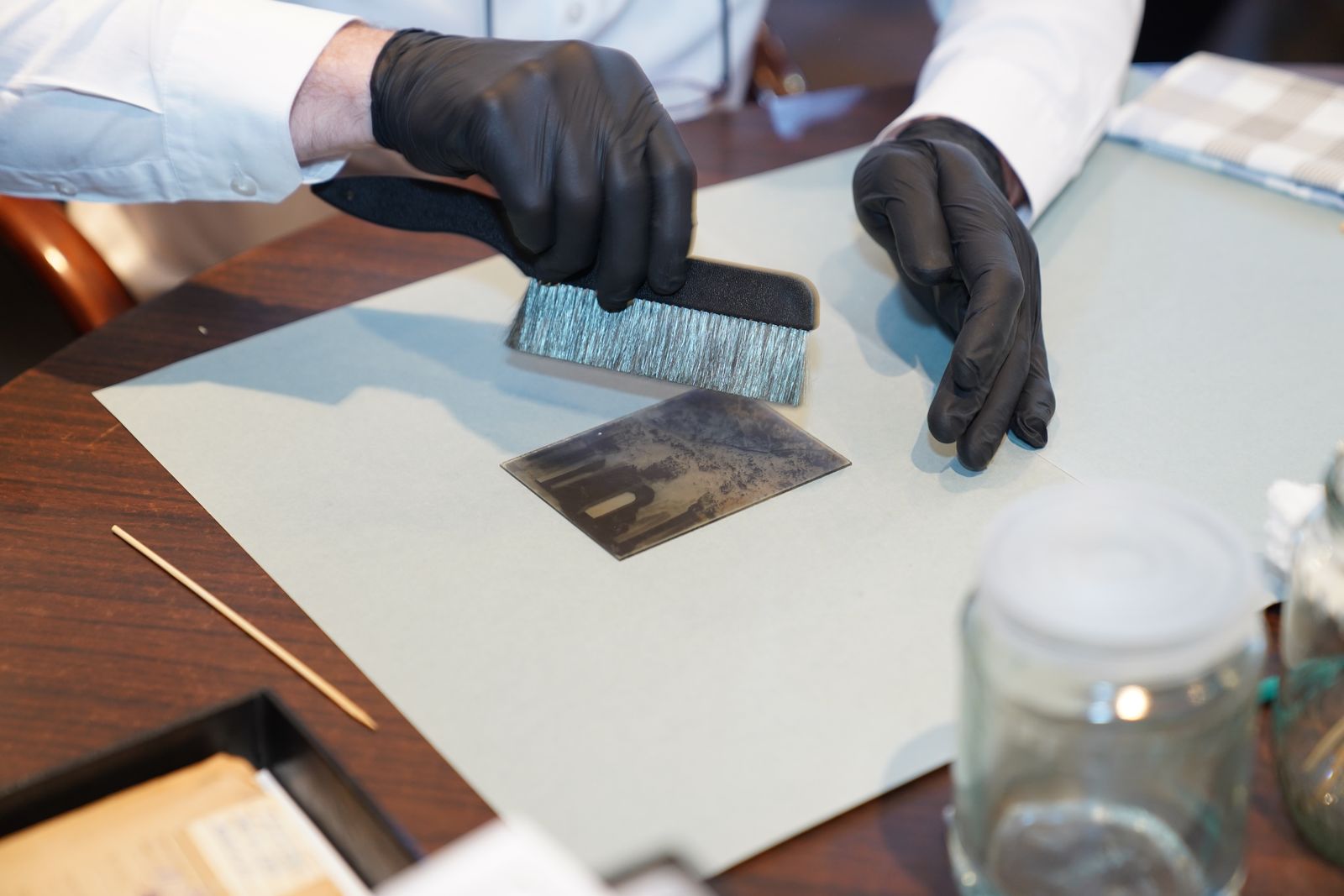
Short answer: Most surface damage on an old photo is fixable. Tears, creases, stains, dust and faded colour all respond well to careful retouching. What cannot be fixed is detail that was never captured or has been lost completely, such as a face under heavy blur or a missing eye. Honest digital photo enhancement services will tell you which one you are dealing with before any work starts.
The test we use: is the detail still there?
Every old photo question comes down to one thing. Is the information still on the print, just hidden, or is it gone?
Hidden detail can be brought forward. Faded ink, yellowed paper, low contrast and surface grime all sit on top of detail that still exists. Our editors work with what the original holds.
Gone is different. If a face is a smear of grey, there is nothing underneath to lift. We will not pretend otherwise, and we never add detail that was not in the original photo.
Damage that usually responds well
These are the problems we see most often, and they are the ones that tend to go well:
- Tears and creases through plain areas like walls, sky, floors and clothing.
- Stains, water marks and the brown spotting that shows up on old paper.
- Dust, surface scratches and sticky residue from an old album page.
- Colour casts, where the whole photo has gone orange, pink or green.
- Flat, low contrast prints that look grey instead of bright.
- Small missing corners and edges, rebuilt by our retouchers from the material that surrounds them.
Faded colour gets its own treatment, and our photo enhancement and restoration page shows what that looks like.
Damage that sets a hard limit
Some things we simply cannot undo. It is fairer to say so early:
- A face lost to heavy blur or camera movement. The shape of the features is not recorded.
- A crease that runs straight through an eye, a mouth or a hairline. There is no reference nearby to work from.
- Emulsion that has flaked away over a person's face or hands.
- Very small files, such as a thumbnail saved from an old email or an early phone.
- Heavy compression, where the image has been saved, shared and resaved many times.
- Someone standing in deep shadow with no tonal separation at all.
In these cases we can still improve the rest of the photo. The group can look clean and bright while one face stays soft. Many families are happy with that, as long as they knew going in.
Grey areas that depend on the print
Plenty of photos sit between the two lists. Silvering, that mirror sheen on old black and white prints, sometimes lifts well and sometimes does not. Heavy grain in a 1970s colour snapshot can be softened, but softening always costs a little fine detail.
Mould marks are another one. Light spotting cleans up. Deep growth that has eaten the paper takes the image with it.
For these we ask to see the file first. A quick look tells us more than a long description. You can see the kind of change we mean on our before and after examples page.
How a photo moves through our studio
You send the digital file you already have. Our editors assess it, then work through the damage in stages, starting with the large problems and finishing with the fine ones. AI-assisted tools guided by our editors help with noise and detail, and the judgment calls stay with people.
We do not invent features. We do not promise a photo will look new. We tell you what we expect to achieve, and we show you. Results vary with the condition of the original: two photos from the same album can behave very differently.
How to decide what is worth restoring
Pick the photos that matter most, not the largest pile. A dozen strong images beat a hundred weak ones.
Check the faces first. If you can see eyes, noses and mouths on your screen, the photo is a good candidate. If you cannot, restoration will not bring them back.
Think about the end use too. A photo destined for a memorial video has different needs, and Tribute Montage handles that kind of project. If the photos will sit alongside old home video, our video enhancement and restoration work can run in parallel.
Pixel 360 Media works from Westchester, NY, and serves clients nationwide through a fully remote platform.
Stay Updated
Get the latest tips on video enhancement, photo restoration, and audio cleanup delivered to your inbox.
No spam. Unsubscribe anytime.